
A Journey Through Time in Tamluk
Picture yourself on the banks of the serene Rupnarayan River in West Bengal, India, where the past comes alive through ancient ruins and sacred temples. Tamluk, once known as Tamralipta, is a small town with a monumental history dating back to the 3rd century BCE. This ancient port city connected India to far-off lands, making it a treasure trove of history, mythology, and culture.
The Historical Grandeur of Tamralipta
Tamluk, or Tamralipta, was a bustling port city mentioned in the Mahabharata and Puranas. Nestled near the Bay of Bengal, with the Rupnarayan and Subarnarekha rivers, it thrived on maritime trade with Southeast Asia, Sri Lanka, and the Mediterranean. Excavations have revealed artifacts like Roman amphorae and Greco-Roman gold coins, showcasing its global connections over 2,500 years ago. The nearby Ghatshila copper mines, which powered its economy, inspired its name—tamra means "copper" in Sanskrit.
Mythical Connection: The Mahabharata recounts how the Pandavas’ Ashwamedha horse was challenged by Tamralipta’s prince, highlighting the city’s prominence in ancient lore.
Sacred Sites and Unique Temples
At Tamluk’s heart stands the Bargabhima Temple, a 1,150-year-old shrine dedicated to Goddess Kali, revered as one of the 51 Shakti Peethas. Local tales tie it to the Pandava prince Bhima, and it hosts the vibrant Bhim Mela every February or March. Uniquely, this temple, along with the Chakreshwar Shiva Temple and Jishnu Hari Temple, faces west—a rare feature in Hindu architecture. Historians believe this was to ensure visibility from the royal palace, reflecting the vision of Tamralipta’s rulers.
Tamluk was also a hub for Buddhism. Chinese travelers Faxian (5th century CE) and Xuanzang (7th century CE) noted its many Buddhist monasteries and an Ashokan pillar. From Tamluk’s port, Buddhist missionaries, including Ashoka’s children Mahendra and Sanghamitra, sailed to spread Buddhism to Sri Lanka and beyond.
Spiritual Trivia: The Bargabhima Temple is believed to house the small finger of Sati’s left foot, making it a sacred pilgrimage site.
The Tamluk Rajbari: A Royal Relic
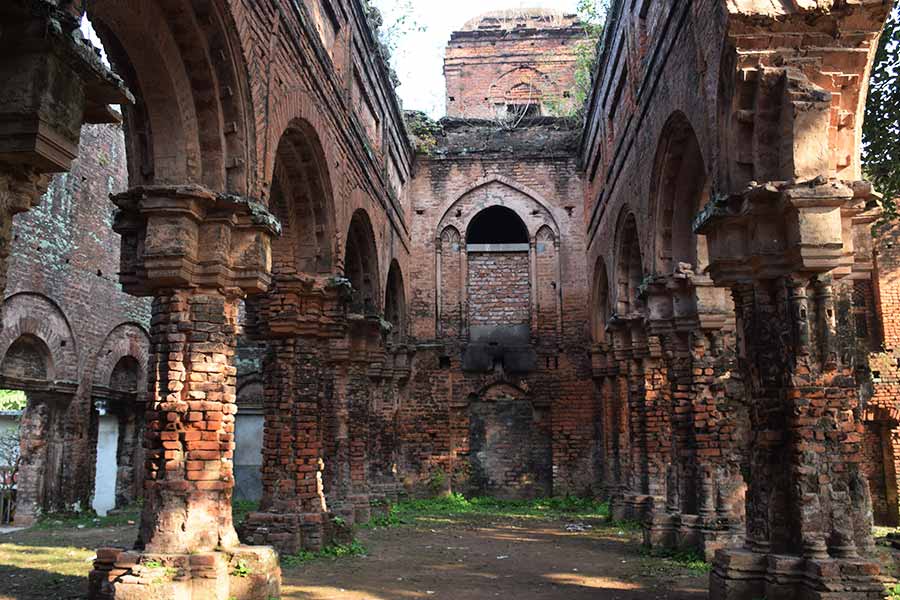
The Tamluk Rajbari ruins, once home to the Mayur dynasty, echo the town’s royal past. Built around the 5th century BCE, this palace was a center of power and culture. In the 20th century, it supported India’s freedom struggle, hosting freedom fighters during the 1930 Salt Satyagraha and a historic 1938 meeting with Subhas Chandra Bose. Today, its crumbling walls draw history enthusiasts.

Archaeological Wonders
Tamluk’s soil hides treasures of its past. Excavations in the 1950s and 1970s uncovered terracotta figurines, Shunga-period artifacts, and Egyptian-style vases, hinting at rich cultural exchanges. The Khātpukūr tank, a 15th-century relic, and the mound beneath the Bargabhima Temple have yielded artifacts now preserved in a local museum, painting a picture of a cosmopolitan city.
Tamluk Today: A Blend of Past and Present
Though Tamralipta’s port faded as the Rupnarayan River shifted, Tamluk thrives with a population of 65,306 (2011 Census). As Purba Medinipur’s headquarters, it supports agriculture, chemical industries, and engineering. The Rupnarayan riverbank is a popular picnic spot, while landmarks like the Bargabhima Temple, Tamluk Rajbari, and Rakhit Bati—a former revolutionary hub—attract tourists. The town honors freedom fighter Matangini Hazra with a memorial near Banpukur.
Why You Should Visit Tamluk
Tamluk is a living museum of India’s ancient glory. Whether you’re a history buff, spiritual seeker, or curious traveler, it offers a unique journey. Stroll along the Rupnarayan River, marvel at the west-facing temples, or explore the Rajbari’s ruins to feel the pulse of a city that once linked India to the world. Don’t miss the Bhim Mela for a taste of local culture.
Travel Tip: Visit Tamluk in February or March to experience the Bhim Mela and enjoy pleasant weather for exploring the riverbank and historical sites.
Plan Your Visit
Tamluk is accessible via Tamluk Junction and Sahid Matangini railway stations. Stay at local guesthouses and explore nearby attractions like Geonkhali, where the Rupnarayan meets the Hooghly River. For more on West Bengal’s hidden gems, visit West Bengal Tourism.
Post a Comment